Mangiarelli Rehabilitation Physical Therapy Blog

What’s the Difference between Manual Therapy and Massage Therapy?
What is the difference between manual therapy and massage therapy? Often manual therapy and massage are used interchangeably despite the fact that there are fundamental differences. Physical therapists provide manual therapy, which is a hands-on treatment technique to regain movement, activate muscles, and reduce pain and inflammation. Manual therapy includes soft tissue and joint mobilizations, myofascial release, muscle energy techniques, manual traction, cupping, dry needling, lymphedema, thrust manipulation, and strain-counter-strain techniques.

Tips for Setting Smart Health Goals
As we prepare to enter the new year, it’s the perfect time to set realistic goals for a healthier, happier 2022 using the SMART goal-setting framework. Too often, we set undefined and unsustainable resolutions that die out by February. Instead, we propose crafting a plan of smaller steps to achieve goals that are specific, measurable, attainable, relevant, and time-bound. Check out our breakdown of how to build a SMART goal and our 8 suggestions for 2022 health resolutions!

Physical Therapy for Piriformis Syndrome
Piriformis pain syndrome can develop due to tightening of the piriformis muscle, which can irritate or compress your sciatic nerve causing significant pain in the buttocks, hip, lower back, and back of the leg. The piriformis muscle is a flat, band-like muscle located in the buttocks directly above the sciatic nerve that stabilizes the hip joint and enables lower extremity movement. Physical therapists can relieve piriformis syndrome pain and restore normal movement and range of motion in the affected area through targeted strengthening exercises, manual therapy, and movement reeducation.

10 Holiday Health and Fitness Tips
The holiday season is in full swing with holiday parties, work events, last-minute shopping, and cross-country traveling. It can be tempting to abandon your healthy habits with the highly palatable comfort foods of the season, the hectic pace, and the cold weather. Check out our 10 tips to stay healthy and fit over the holidays while thoroughly enjoying all the holiday season has to offer!

What to Expect After a Total Hip Replacement
A total hip replacement surgery is a common orthopedic surgery performed due to arthritis or certain hip fractures to relieve severe pain, improve hip mobility, and restore function. A hip replacement involves removing damaged bone and cartilage from the hip joint and replacing it with prosthetic parts. Physical therapists play an important role in pre-surgery preparation and post-hip replacement rehabilitation, helping to improve mobility, manage pain, regain strength, and restore function in your new hip.

10 Tips for Exercising in the Cold
In Northeast Ohio, the winter months can bring frigid temperatures, ice, and snowy weather. However, the colder weather doesn’t mean that those outdoor activities are canceled. Whether you’re an athlete, a runner, an outdoors lover, or just need a break from the inside, you can still exercise outdoors safely by following these 10 tips!

Frozen Shoulder Infographic
Frozen shoulder is a condition that causes pain and stiffness in the shoulder joint and can significantly reduce shoulder mobility. Frozen shoulder occurs when the shoulder capsule tissues thicken and become stiff, tight, and inflamed. This can occur after surgery due to enforced immobility of the shoulder, trauma to the joint, or joint inflammation. Physical therapy is recommended as the first line of treatment for frozen shoulder to increase shoulder mobility and regain range of motion. Check out our infographic to learn more!

Physical Therapy for Neck Pain
Neck pain is one of the most common musculoskeletal conditions, affecting 30 to 50% of adults each year. While there can be numerous causes of neck pain, the most common source of neck pain is mechanical neck pain resulting from muscle strain or joint issues. Physical therapy is the most effective treatment for neck pain, reducing pain and stiffness, improving range of motion, and strengthening the postural flexibility of the neck through therapeutic exercise and manual therapy.
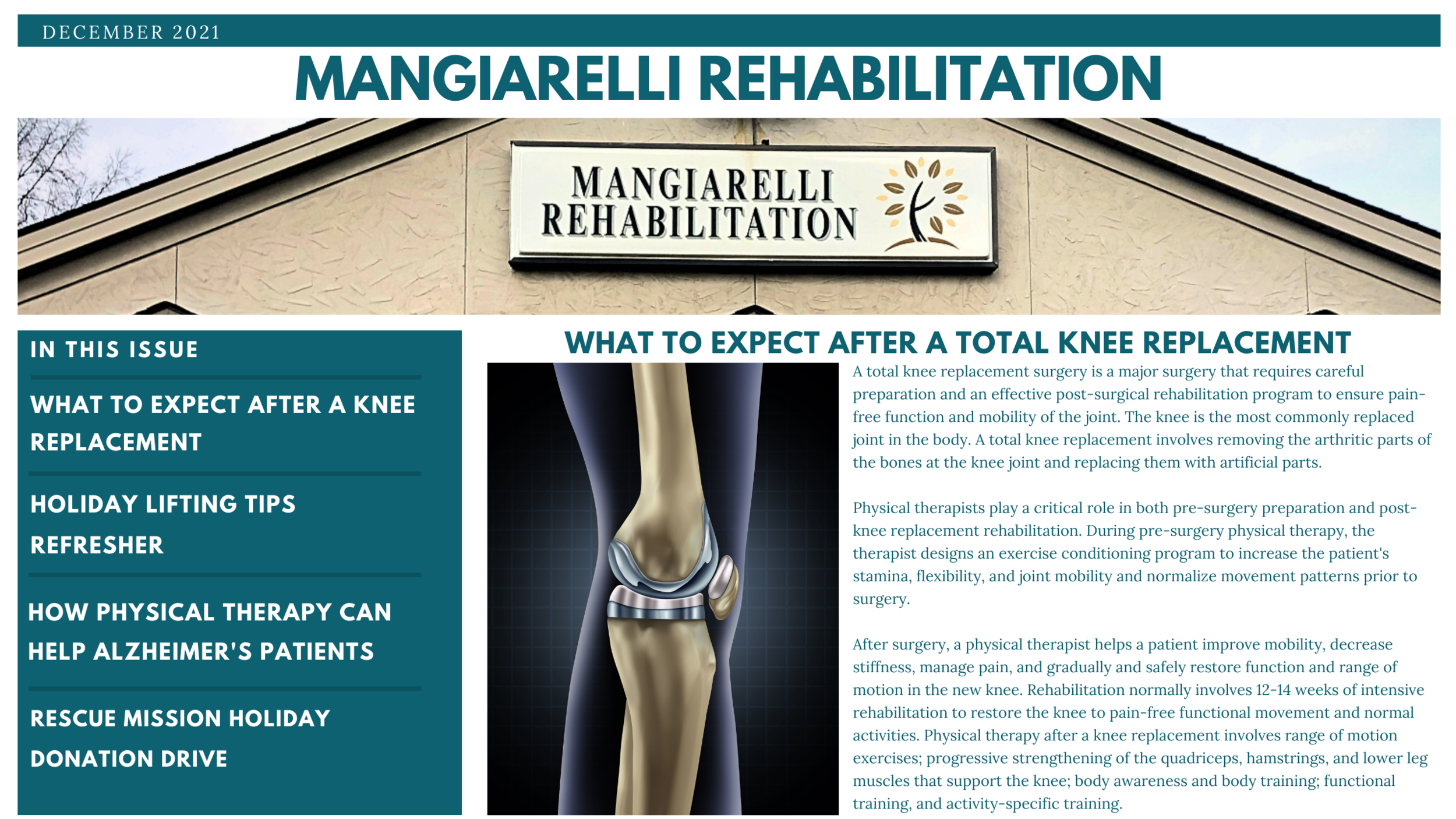
December 2021 Newsletter
Our December 2021 Newsletter highlights what to expect after a knee replacement, holiday lifting tips refresher, how physical therapy can help Alzheimer’s patients, and how to participate in the rescue mission holiday donation drive.

Physical Therapy for Ballet Injuries
Ballet is a full-body art form that demands precise technique with incredible muscular strength and stamina and extreme flexibility and range of motion. Ballet dancers engage in long hours of training and performance involving repetitive movements that contribute to injuries, particularly in the ankle, foot, leg, hip, and low back. Physical therapists can provide ballet dancers with specialized and customized treatment to help dancers fully recover from injury and effectively restore range of motion, strength, function, and motor control in order to safely return to performance with endurance and power.

Holiday Lifting Refresher and Safety Tips
Mangiarelli Rehabilitation physical therapy assistant, Patti, demonstrates how to lift an object correctly and safely as well as several common but incorrect and unsafe ways to lift. The holiday season requires quite a lot of bending, lifting, and reaching. If you lift improperly, it can lead to back, shoulder, or neck strain and limit your holiday activities. As we enter the holiday season, it’s critical to review how to lift heavy objects safely and take steps to minimize strain and fatigue during your winter and holiday activities.

Physical Therapy for Rheumatoid Arthritis
Rheumatoid arthritis is a systemic autoimmune disease that affects the soft tissues around joints, causing joint inflammation and pain and limiting joint function. Early detection of the condition and treatment is key, which includes drug therapies and targeted exercise. Physical therapists help rheumatoid arthritis patients manage pain and improve muscle strength and joint function and range of motion through a therapeutic aerobic and strengthening exercise program.

How Physical Therapy Can Help Alzheimer’s Disease Patients
In honor of National Alzheimer’s Disease Awareness Month, we are explaining how physical therapy and therapeutic exercise can help improve symptoms of Alzheimer’s disease and slow the progression of the condition. Exercise improves cognitive functioning, helps Alzheimer’s patients stay mobile and functional as long as possible, and improves overall quality of life. Check out our infographic to learn more!

Improving Balance and Preventing Falls with Physical Therapy
Mangiarelli Rehabilitation physical therapist Jen guides a senior patient through three balance training exercises. Maintaining and improving balance is critical as you age as good balance allows you to maintain a stable, upright position when standing, walking, and sitting and avoid injury from a fall. Physical therapists can help you improve your balance as you age and prevent falls through a customized exercise and balance training program.

What To Expect After a Total Knee Replacement
Are you unsure what to expect after total knee replacement surgery? Check out our blog to learn what to expect throughout the rehabilitation process post-knee replacement! Total knee replacement surgery is a major surgery that requires careful preparation and an effective post-surgical rehabilitation program to ensure pain-free function and mobility of the joint. Physical therapists play a critical role in pre-surgery preparation and post-knee replacement rehabilitation, helping you improve mobility, decrease stiffness, manage pain, and gradually and safely restore function and range of motion in your new knee.
![Diabetes Management [Infographic]](https://images.squarespace-cdn.com/content/v1/5e419cdc97af032560004b99/1636030499983-0YBCZL0Y842JYVPT5ZQN/Blog+Diabetes+Infogr.png)
Diabetes Management [Infographic]
Diabetes is a condition in which the body either produces insufficient amounts of the hormone insulin or does not respond normally to insulin. Physical therapy can help diabetic patients manage the condition and improve their physical fitness, mobility, and insulin sensitivity through a customized exercise program. Check out our infographic on diabetes management to learn more!

November 2021 Newsletter
Our November 2021 Newsletter highlights breast cancer-related lymphedema treatment, core strengthening exercises with our PTA Patti, managing diabetes with physical therapy for National Diabetes Awareness Month, and the fall kid’s toys donation drive.

Physical Therapy for Snapping Hip Syndrome
Snapping hip syndrome is a common injury among dancers, gymnasts, runners, and soccer players. Snapping hip syndrome occurs when a hip muscle or tendon slides and stretches over the hip bone, then snaps when tension is released during movement, causing pain and tightness in the front, back, or side of the hip. Physical therapy can help to loosen tension in the hip and strengthen and heal the muscles and tendons causing snapping hip syndrome for a safe return to sport and dance.

Physical Therapy for MCL Injury
The MCL is the most commonly damaged ligament in the knee that can be sprained or ruptured when a large force is applied to it. The MCL provides support and stability to the knee during lateral and cutting movements and prevents the knee from bending inward toward the other knee. A physical therapist can help an athlete restore function, mobility, stability, and strength to the MCL through therapeutic exercise and targeted strengthening for a safe return to sport.
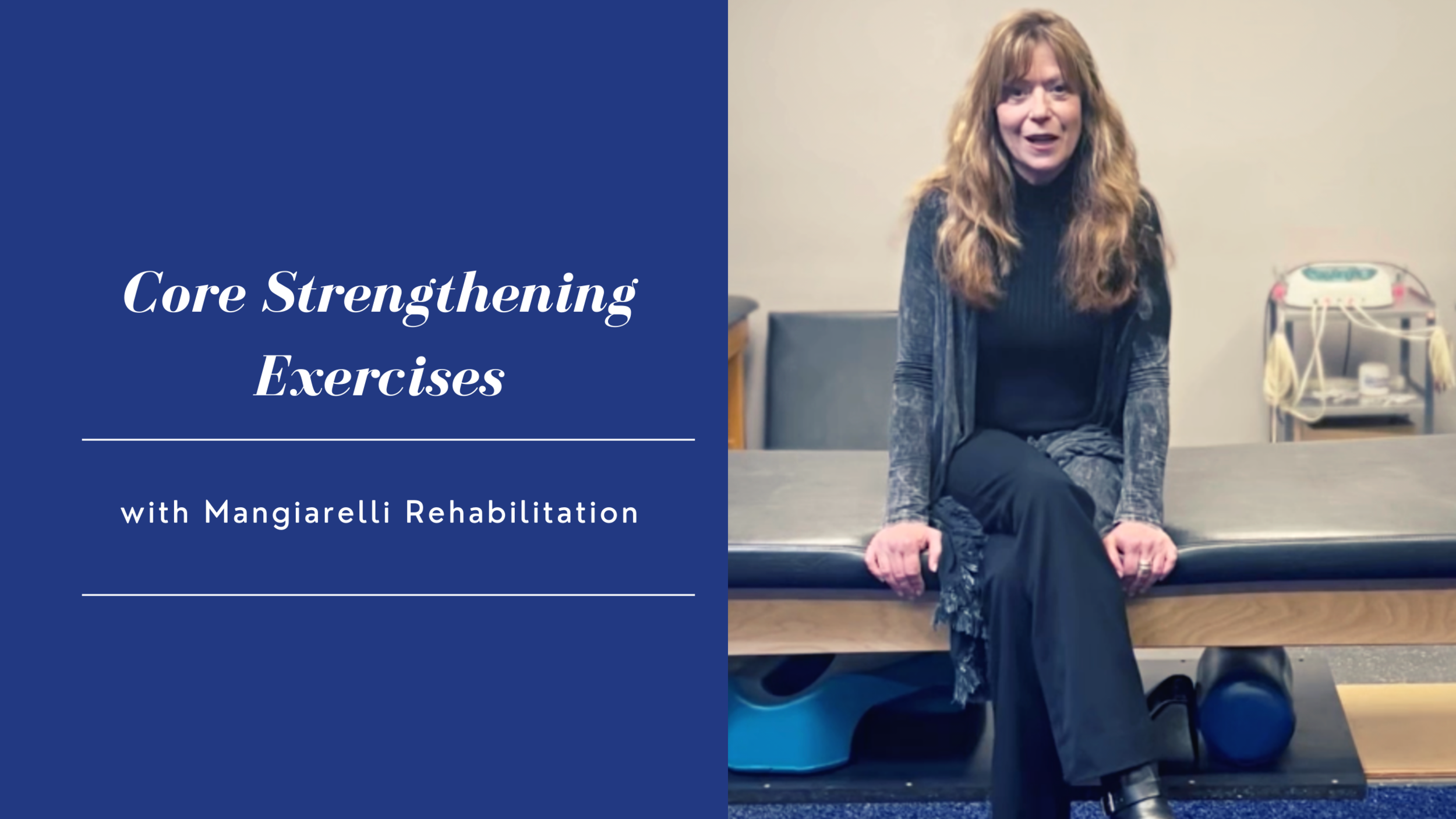
Core Strengthening Exercises
Strengthening your core muscles has numerous benefits, allowing you to walk upright, maintain good posture, control your movement, and engage in daily work and sports activities. The core muscles are the foundation of movement for your entire body, stabilizing the spine, pelvis, and shoulder. A physical therapist can help you properly strengthen core muscles based upon the functional stability you need for various activities. Mangiarelli Rehabilitation physical therapy assistant, Patti Ciferno, demonstrates beginner core strengthening exercises you can do at home.
Follow us on Social Media